
A car changes a Crete holiday completely. The island is big, the best beaches and villages sit at the end of winding roads no bus reaches, and the freedom to leave for a hidden cove at 8am or a mountain taverna at sunset is half the pleasure of being here.
If you’re staying with us in Galatas, a car isn’t just nice to have — it’s genuinely recommended. We’re a short drive west of Chania town, surrounded by beaches, gorges and villages that are wonderful to explore on your own schedule. Here’s everything we tell our guests about renting a car in Chania, from where to book to how to handle those famous mountain bends.
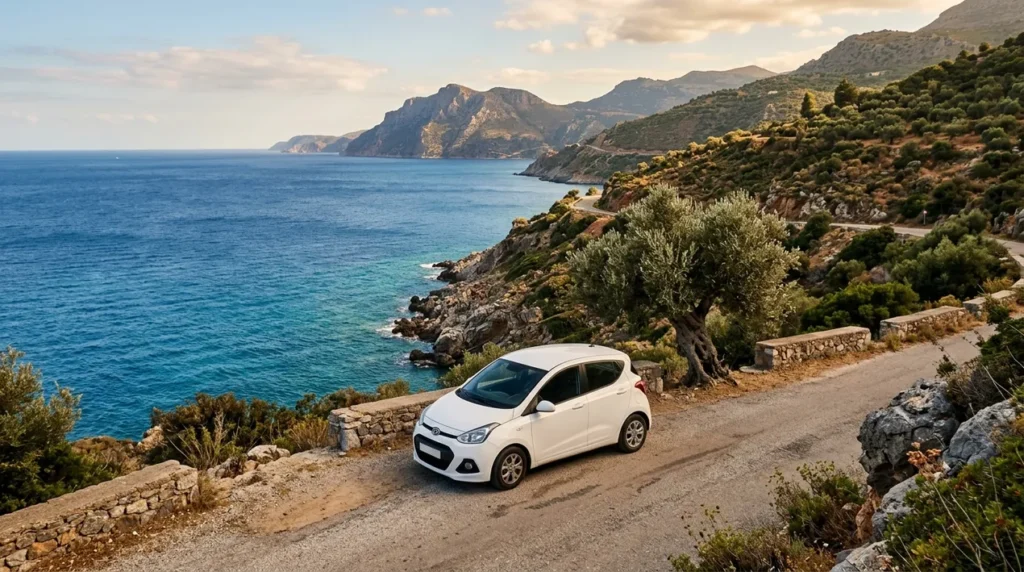
Where to Rent: Airport, Town, or Online?
You have three main options, and the right one depends on your arrival.
Chania Airport (CHQ). Most international and large national agencies have desks right at the airport in Akrotiri, about 15 km from Chania town. This is the most convenient choice if you want to pick up the keys the moment you land and drive straight to the villa. Book ahead in summer — walk-up availability in July and August is unreliable and expensive.
Chania town & Souda port. If you’re arriving by ferry at Souda, or spending a night in town first, there are plenty of local agencies in and around the old town and the port. Local Cretan agencies are often cheaper than the big international brands and the service tends to be more personal — many will even deliver the car to your accommodation.
Online in advance. Comparison sites let you lock in a price months ahead, which matters in high season when rates climb fast. Just read what’s actually included (see insurance below) rather than booking on headline price alone.
Our tip for villa guests: If you’d rather skip the car-rental desk entirely on arrival day — especially after a long flight — a private airport transfer to the villa is an easy, stress-free option, and you can arrange a rental car to be delivered to Galatas the next morning once you’ve settled in. we can help you arrange a reliable transfer with Sea Angel Travel.
What a Car Rental in Chania Costs
Prices in Crete swing a lot with the season, so treat these as rough guides rather than quotes:
- Low season (Nov–Mar): economy cars often around €25–40 per day.
- Shoulder season (Apr–Jun, Sep–Oct): roughly €35–55 per day.
- High season (Jul–Aug): €50–80+ per day for the same economy car, and the cheapest cars sell out first.
A small economy car (think Toyota Aygo, VW Polo or similar) is perfectly adequate for two people and is the easiest thing to park. If you’re a family or plan serious mountain driving to places like the far-south beaches, consider a slightly larger car with a bit more power for the climbs.
Watch for the extras that aren’t in the headline price: additional-driver fees, young-driver surcharges, child seats, and above all the insurance excess, which we’ll get to now.
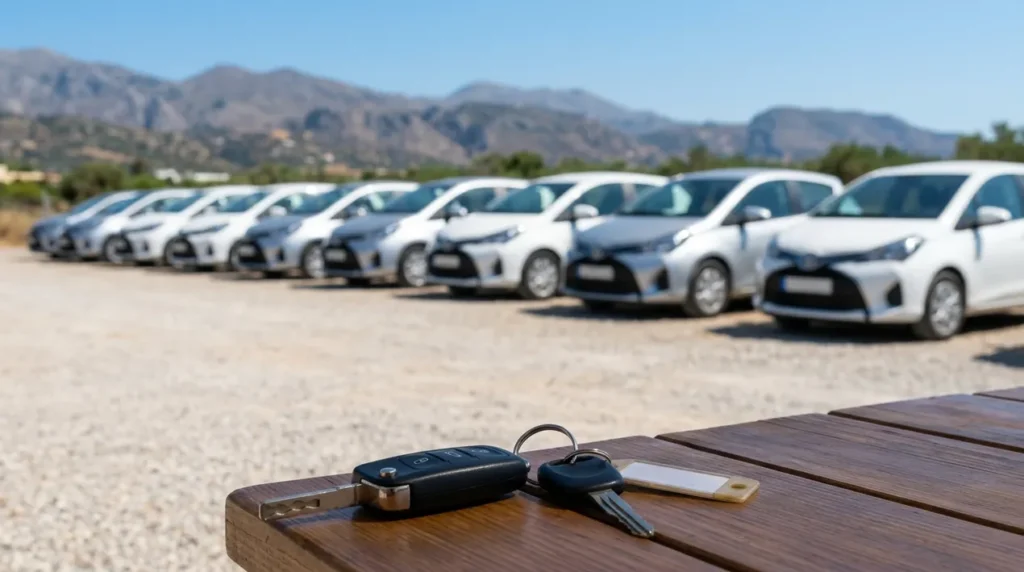
The Insurance You Actually Need
This is where most people overpay or, worse, get caught out. Here’s the plain-English version.
CDW (Collision Damage Waiver) is usually included in the basic rate, but it almost always comes with an excess (also called a deductible) — the amount you’re liable for if the car is damaged. On a basic rental that excess can be €600–1,200 or more.
Zero-excess / full insurance removes that liability. You can buy it from the rental company (convenient but pricier) or through a separate “car hire excess” policy online before you travel (often much cheaper). Either way, if you’re driving unfamiliar mountain roads, paying to reduce the excess to zero is money well spent for peace of mind.
Two things to check carefully:
- Tyres, windscreen and undercarriage are often excluded even from “full” cover — and on Crete’s gravel-edged rural roads, these are exactly the things that get damaged. Confirm what’s covered.
- Always photograph the car — every scratch, the fuel gauge, the tyres — before you drive off, and get existing damage noted on the paperwork.
Driving in Crete: What to Actually Expect
Driving here is genuinely enjoyable once you know the local rhythm. A few honest tips:
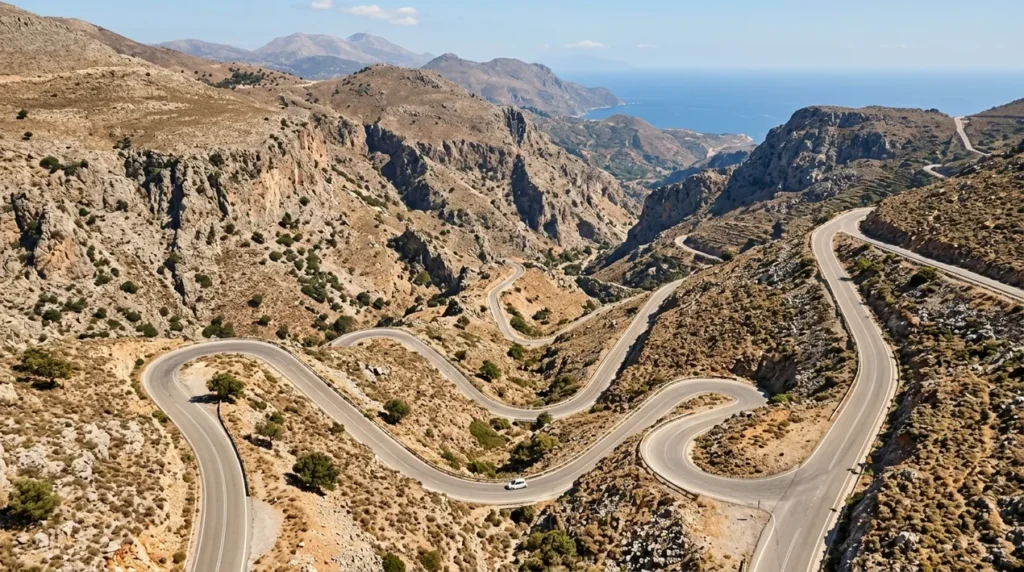
Mountain roads. Many of the best spots are reached by winding, climbing roads with tight bends and the occasional goat. They’re well worth it — just take them slowly, use low gears on steep descents, and don’t rush. Locals know these roads intimately and will sometimes be right behind you; it’s completely normal to pull slightly onto the hard shoulder to let faster traffic pass. It’s a courtesy, not a demand.
Parking in Chania Old Town. The old town is largely pedestrianised — you cannot drive to the harbour. Park in one of the lots on the edge of the centre (there’s paid parking near the market and along the periphery) and walk in. Don’t try to squeeze through the narrow lanes.
Google Maps. Reliable for main routes and towns, but it occasionally suggests “roads” in rural Crete that are really rough farm tracks. If the surface suddenly turns to dirt and the road narrows to nothing, trust your eyes over the app and turn back.
Fuel. Fill up in or near town before heading into the mountains or to remote beaches — rural petrol stations are sparse and may close early or not take cards.
Licence & age. EU licences are fine. Visitors from outside the EU (e.g. US, UK post-Brexit varies, Australia, Canada) should carry an International Driving Permit alongside their home licence — some agencies require it. Minimum age is typically 21–23, with a young-driver surcharge under 25.
Why a Car Makes Sense from Galatas
Being based in Galatas puts you within easy reach of the whole of western Crete — but those places are much easier with your own wheels. With a car you can:
- Reach the beaches and coves west of Chania at your own pace — see our guide to the best beaches in Chania.
- Take on the big day trips: Balos Lagoon, the Samaria Gorge, and more in our day trips from Chania guide.
- Discover the inland villages at leisure — start with our best villages near Chania and the Galatas village guide for what’s right on your doorstep.
- Drive into Chania town for dinner — then wander the Old Town and pick somewhere from our best restaurants in Chania.
A week here without a car means leaning on buses and taxis and missing the quiet, out-of-the-way places that make Crete special. A week with one means the whole island is yours.
Staying with us soon and not sure how to handle transport? Get in touch — we’re always happy to help our guests plan the smoothest possible arrival and point them to trusted local rental and transfer options.

